

Home / Shoe Repair / Trail and Trekking Shoe Repair
Trail and Trekking Shoe Repair shoes in Ho Chi Minh City
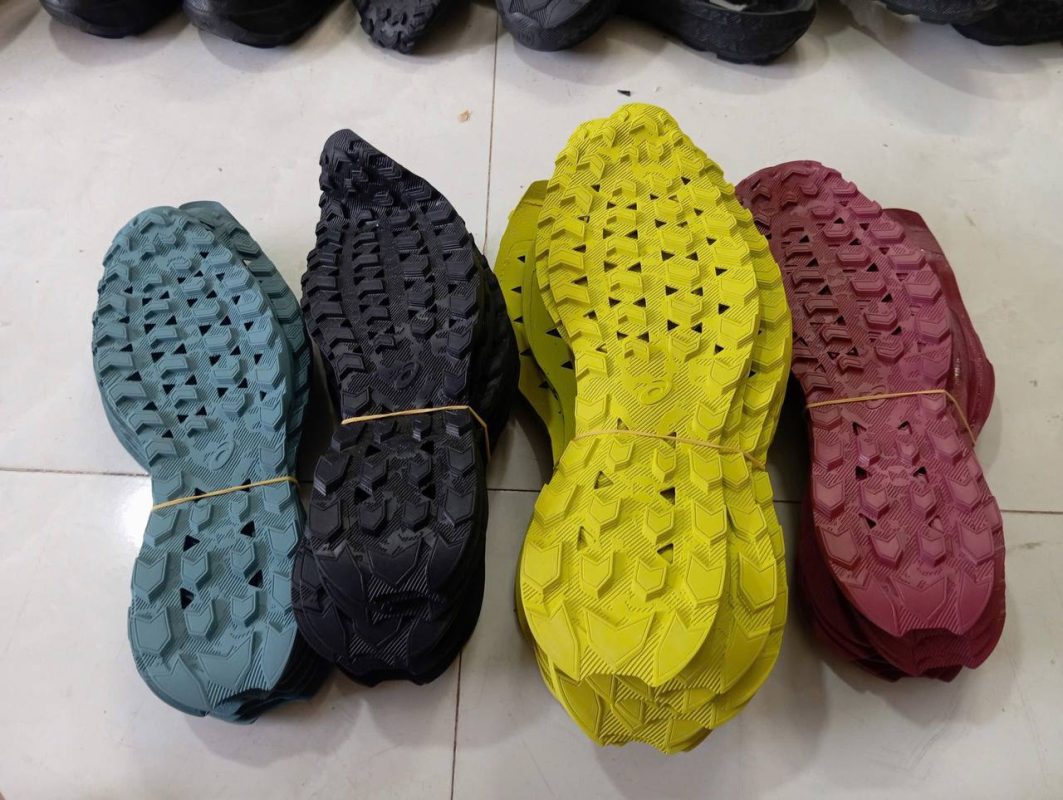
Replacement soles for trail shoes at the Foxpro workshop: several sizes and colours, deep lugs for dirt trails.
Each kind of terrain breaks shoes its own way
Gravel and roots
Sharp stone edges slice the mesh at the toe and along the sides, and the rubber rand peels away from the upper. We patch the mesh and re-glue the rand before water and grit get underneath.
Red mud and stream crossings
Water and fine silt rot the glue between the sole and the upper, and shoes that dry slowly pick up mould and smell. Re-gluing a loose sole is 250,000d, done after the shoes are fully dried, with mould treatment alongside.
Long climbs and steep descents
Climbing wears the toe, descending wears the outer heel and sands the lugs flat across the middle. We patch rubber onto the worn zones, or resole once the lugs are smooth across the whole sole.
Resoling trail shoes with worn lugs, fitting deep-lug soles
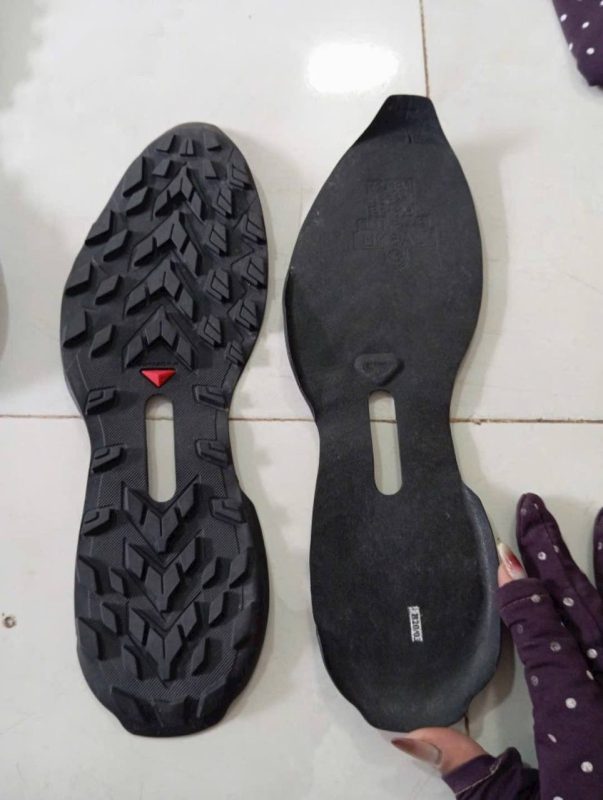
Lugs are what holds you on damp earth and wet rock, and they are also the first thing to go: the outer heel and the middle of the sole go smooth first, the toe later. The workshop strips the smoothed rubber and fits a new deep-lug sole made for off-road shoes, cut to the shape of the old one, leaving the midsole foam alone. Resoling is 300,000d - 850,000d depending on sole size and shoe type; if only a few pads are worn, patching costs far less.
Fitting Vibram soles to trail and trekking shoes
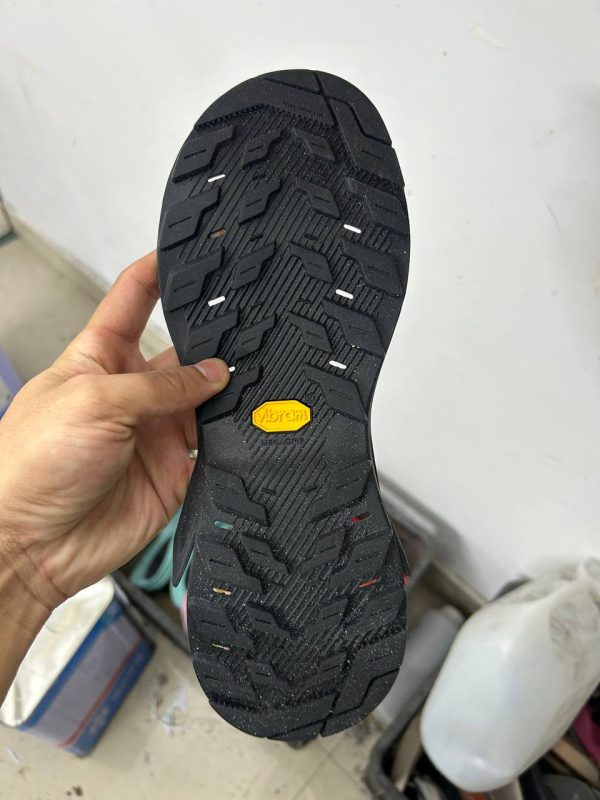
Many trail models and hiking boots ship with Vibram soles in the first place, so adding a Vibram layer keeps the grip you are used to. Vibram anti-wear sole protector, 550,000d: a thin rubber layer over a sole that is still intact, which suits a new pair or one with only a few smooth pads. When the added layer wears out you replace that layer and the original sole is still there - worth it on a trail shoe that cost eight or nine million. Read more: Vibram anti-wear sole protectors.
Re-gluing loose soles and lifted toe rands
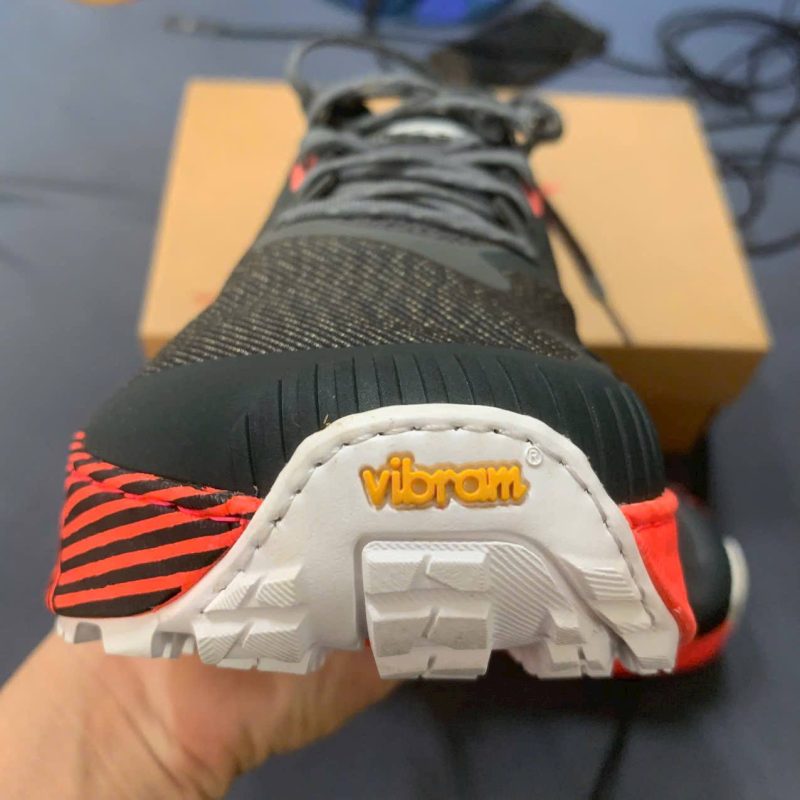
After a few wet outings the sole usually opens at the toe and creeps along the sides, or the rubber rand around the toe peels off the mesh. The workshop vacuums the grit out of the gap, dries the shoes completely, strips the rotted glue and only then glues and clamps them: re-gluing a loose sole, 250,000d. Skipping the drying step is why so many shoes come apart again on the very next outing.
Patching torn mesh, toe boxes and heels
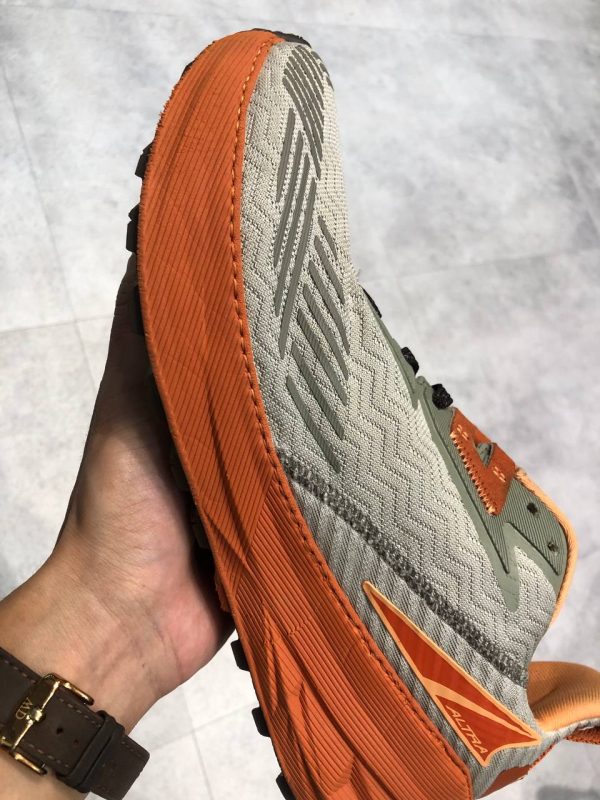
Trail mesh is thin so it drains fast, and the trade-off is how easily it tears on rock or a root. The workshop backs it with matching fabric or mesh from the inside and then presses or stitches it; a tear along a seam is repaired with cosmetic restitching at 200,000d, and a torn heel lining that rubs your heel with heel lining fabric repair at 450,000d. On shoes with a waterproof membrane we say up front that the patched area will no longer be watertight.
Resoling trekking boots and dealing with crumbling PU
Hiking boots stored for years often suffer PU hydrolysis: squeeze the sole and it crumbles, and a few kilometres in it breaks away in chunks. The rotten material has to be stripped off and a new sole fitted - gluing cannot save it. If the nubuck upper is still sound the job is well worth it, and faded or mouldy leather is handled in the same visit with suede restoration at 500,000d - 750,000d.
New laces and eyelets, and a clean-up after the trail
Thin quick-pull laces snapping mid-route is routine, and lace eyelets pull out too. The workshop fits new laces and eyelets and restitches the eyelet anchors; the price depends on the type and is quoted after we see them. Shoes back from a muddy route should go through shoe cleaning with mould and odour treatment - do not leave dried mud in them until next season.
Salomon trail shoe repair
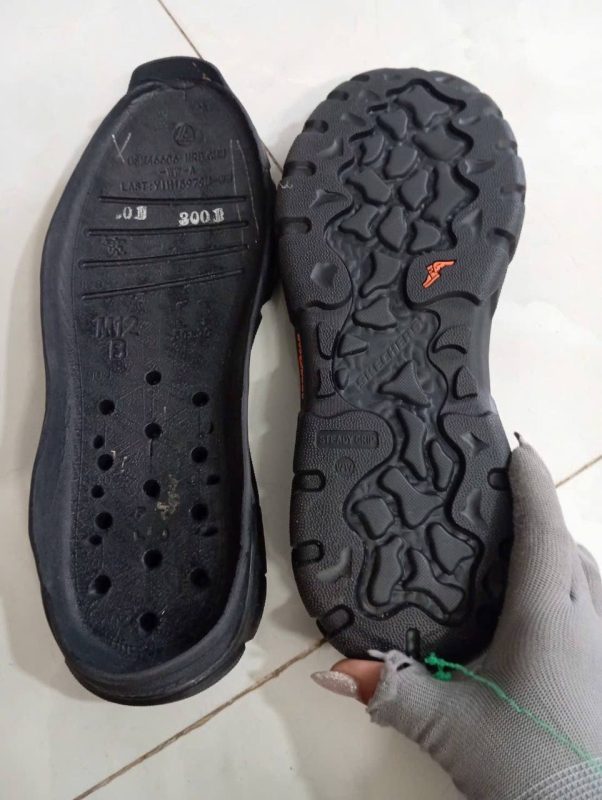
Salomon spends more time on our bench than anything else, because Vietnamese trail runners buy so many of them. Three familiar faults: Contagrip lugs gone smooth at the outer heel after a few seasons of descending, the quick-pull lace snapping mid-route, and the rubber toe rand peeling off the mesh after stream crossings. All three are fixable: a deep-lug resole or rubber patches, new laces with eyelets, and re-gluing the rand once the shoes are properly dry.
Hoka, Altra and Topo trail shoe repair
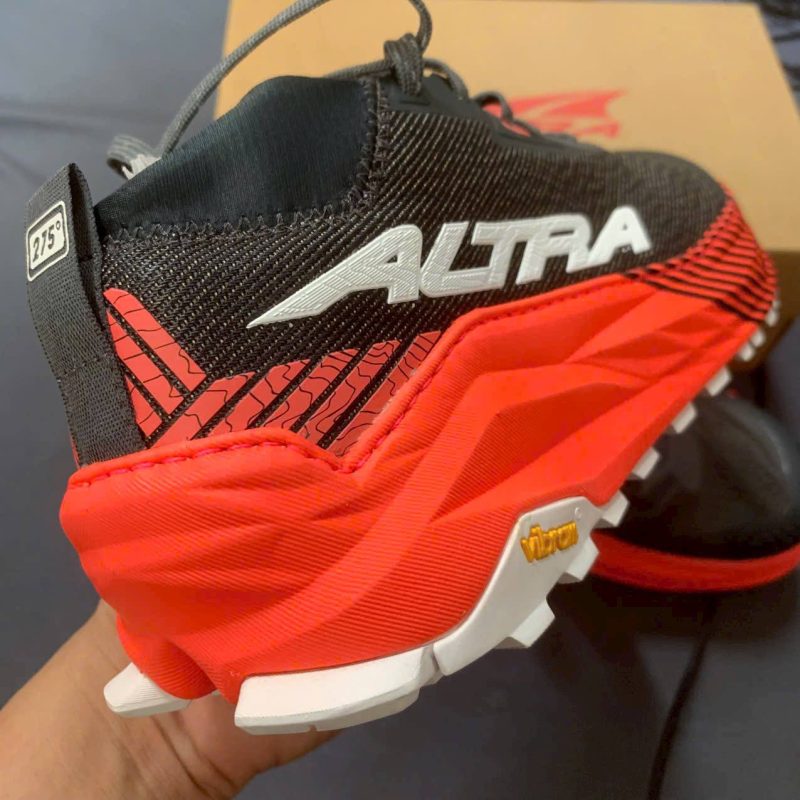
The thick-foam group: Speedgoat, Lone Peak and similar models carry rubber only in patches, and once a patch wears through, gravel sands the foam directly. Patching rubber on as soon as foam shows is what makes these shoes last; let the foam dish out and a patch can no longer sit flat. Wide toe boxes like Altra also tear at the little-toe edge, where patching from the inside is the neatest fix.
La Sportiva, Scarpa and stitched-sole mountain boots
These are solid builds, usually on Vibram soles with a rubber rand running around the toe. A lifted rand can be re-glued, a worn sole is replaced, and broken sole stitching is sewn back through the original holes - cosmetic restitching, 200,000d. This is the group most worth repairing, because the upper outlasts the sole many times over.
Merrell, Columbia and The North Face repair
The hiking shoes sold most widely in Vietnam, mostly low-cut boots in nubuck or heavy mesh on Vibram soles. Two jobs come up: resoling when the lugs are worn or the PU sole has crumbled in storage, and restoring faded or mouldy nubuck at 500,000d - 750,000d. Do both in one visit and the boots look newly bought.
Nike, Adidas Terrex, Asics and Saucony trail shoes
Trail models from the road-running brands tend to use softer rubber: good grip on dry trails, but quick to wear if your route mixes in concrete. If you run half road and half dirt, fitting Vibram early costs less than resoling once the lugs are gone. See also Nike shoe resoling and Adidas shoe resoling.
Kailas, Decathlon and other brands
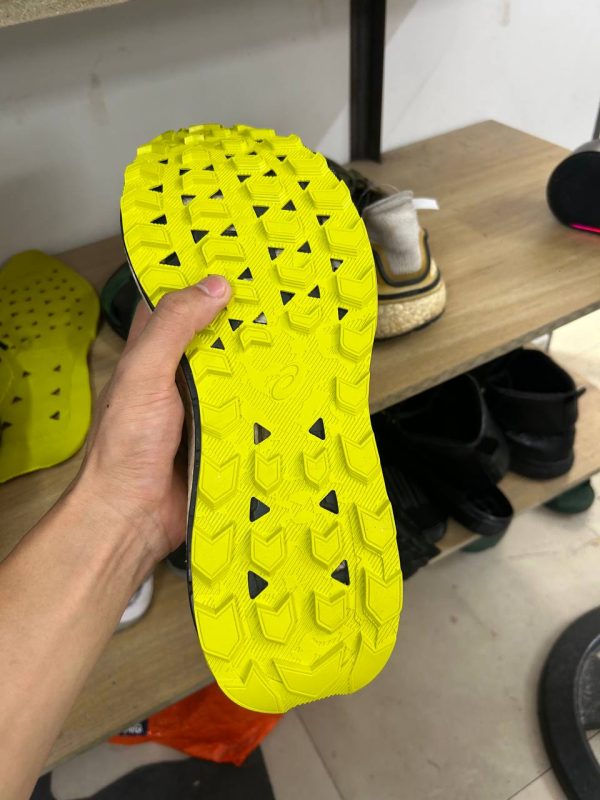
Kailas, and Quechua and Evadict from Decathlon, are what many people pick for a first route - priced so that repairing beats replacing. These pairs usually fail at the sole edge glue and the toe mesh long before the lugs wear out. The workshop also takes army boots, duty boots and safety boots used in the forest: re-gluing, resoling, restitching.
Send your shoes before race season - the workshop is in Tan Phu
The Foxpro workshop is at 1/56 Nguyen The Truyen, Tan Son Nhi, Tan Phu, open 8am to 6pm every day. Trail runners in Ho Chi Minh City usually bring shoes in after a training season on Nui Dinh or Nui Chua Chan, or after the Ta Nang - Phan Dung route: soles packed with red earth, lugs worn on one side, a few tears in the mesh.
If you are aiming at a race in Da Lat in March or Sapa in September, send the shoes early so you still get a few runs to adjust to the new grip. If dropping by is awkward, choose door-to-door pickup when you book, or send them by courier from another province.
Road running shoes fail differently - see running shoe repair.
We collect from your door in these districts
Trail and trekking shoe repair price list
| Service | When you need it | Price |
|---|---|---|
| Resoling, fitting deep-lug soles | Lugs smooth across the whole sole, no grip left | 300,000d – 850,000d |
| Vibram sole protectors | Pair still new, or only a few smooth pads | 550,000d |
| Re-gluing loose soles | Sole opened after water crossings, toe rand lifted | 250,000d |
| Cosmetic restitching | Tear along a seam, collar split | 200,000d |
| Heel lining fabric repair | Heel lining torn and rubbing your heel | 450,000d |
| Restoring mouldy suede shoes | Nubuck boots mouldy or faded | 500,000d – 750,000d |
| Patching mesh, new laces, new eyelets | Mesh holed, lace snapped, eyelet pulled out | Quoted after we see it |
See the full list in the shoe repair pricing.
Quick answers about trail and trekking shoe repair
How much does trail or trekking shoe repair cost?
From the shoe repair price list, the same for every brand: resoling 300,000d - 850,000d, Vibram anti-wear sole protector 550,000d, re-gluing a loose sole 250,000d, cosmetic restitching 200,000d, heel lining fabric repair 450,000d, restoring mouldy suede shoes 500,000d - 750,000d. Patching mesh and fitting new laces or eyelets have no set price, so the technician quotes after seeing the shoes.
Will a resole give me lugs as deep as the originals?
Honestly, no - not the brand original, because makers almost never sell soles separately. The workshop uses deep-lug rubber made for off-road shoes, cut to the shape of the old sole, and it grips well on trails and dirt. If you race technical terrain and need the exact rubber compound of the original model, keep the old pair for training and buy new ones to race in - we would rather say so than overpromise.
How does a Vibram protector differ from a resole?
A Vibram anti-wear sole protector at 550,000d adds a thin rubber layer over a sole that is still intact, for a new pair or one with just a few smooth pads, and the original sole stays. A resole strips the worn rubber off entirely and fits a new sole, which is what you do once the lugs are gone.
Will a sole that came unglued after a stream crossing hold if re-glued?
It holds if the order of work is right: vacuum the grit out of the gap, dry the shoes completely, strip all the rotted glue, and only then glue and clamp. Gluing onto a damp surface is why so many pairs come apart again on the next outing. Where the midsole has been soaked for a long time and gone crumbly, the technician will tell you plainly that glue will not hold.
Does patching the mesh keep the Gore-Tex waterproofing?
Not intact, no. The membrane sits between the layers, so a tear that reaches it makes that spot leak, and stitching adds more holes. The workshop prefers pressed patches from the inside to limit needle punctures, but says it up front: after a patch the shoes are sound mechanically, not waterproof as new.
My trekking boots were stored for years and the sole crumbles - what now?
That is PU hydrolysis, common in boots left in a cupboard. Glue cannot save it; the rotten material is stripped off and a new sole fitted. If the leather upper is still sound the job is well worth it, because the expensive part of a boot is the upper, not the sole.
I have a race coming up - when should I send the shoes?
Early, not right before the start. After a resole or a new protector you still want a few runs to get used to the grip. Race season in Da Lat in March and Sapa in September is when the workshop is busiest; when we take the shoes in, the technician gives you a specific return date so you can plan.
How do I send shoes from another province?
By courier to the workshop in Tan Phu - dry them and knock the mud off before packing, so they do not sit and grow mould in transit. Inside Ho Chi Minh City, choose door-to-door pickup when you book: we collect in every district and deliver them back when the work is done.
Send a photo of the sole and we will quote first
Photograph the sole, the toe rand and the torn areas and send them to Zalo 0388665129, or attach them when you book. Tell us which routes you run so the technician can pick the right sole.